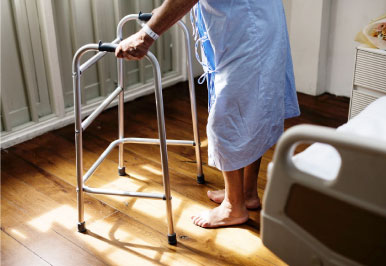
A nursing-home resident or family may have a Virginia negligence claim when substandard care causes a preventable injury or death. A COVID-19 infection or outbreak alone does not establish liability. The evidence must show that the facility or another health care provider breached an applicable duty and that the breach caused legally recoverable harm.
Potential cases may involve failures concerning:
- Infection prevention and control
- Resident isolation or cohorting
- Staffing and supervision
- Monitoring of symptoms and vital signs
- Hydration and nutrition
- Medication administration
- Pressure-injury prevention
- Fall prevention
- Timely transfer to a hospital
- Communication with physicians and family members
COVID-era claims may also involve state disaster immunity, federal countermeasure protections, medical-malpractice requirements and expired or approaching filing deadlines.
A Virginia nursing home abuse lawyer can review the resident’s records, facility policies, staffing evidence, inspection history and applicable legal deadlines. Representation does not guarantee compensation or a particular outcome.
Historical Context for This Article
This article was originally published on June 2, 2020, during the first months of the COVID-19 pandemic.
At that time, families faced rapidly changing public-health guidance, visitor restrictions, staffing shortages, limited testing and serious outbreaks in long-term care facilities.
The legal guidance below has been updated for 2026. It should not be read to mean that every nursing home with a COVID-19 outbreak acted negligently or that every pandemic-era claim remains within the filing deadline.
Get a free legal consultation
CALL 757-648-8579Can You Sue a Virginia Nursing Home for COVID-19 Neglect?
Potentially. A viable claim generally requires evidence establishing:
- The nursing home or health care provider owed the resident a legal duty.
- The provider failed to comply with the applicable standard of care.
- The failure proximately caused an injury or death.
- The resident or statutory beneficiaries sustained recoverable damages.
The presence of COVID-19 does not eliminate these elements.
A claim may be difficult when the evidence shows that the facility used reasonable infection-control practices but an outbreak occurred despite those measures. A claim may be stronger when records show preventable failures that contributed materially to the resident’s harm.
What Conduct May Support a Nursing Home Neglect Claim?
Failure to implement infection-control procedures
Potential issues may include:
- Failure to identify symptomatic residents or staff
- Failure to follow reasonable isolation or cohorting procedures
- Improper use or distribution of protective equipment
- Failure to clean shared equipment or resident areas
- Failure to educate staff about infection-control procedures
- Failure to maintain an effective infection-prevention program
- Failure to respond to known transmission within the facility
A later infection does not by itself prove that any of these failures occurred.
Failure to monitor a resident
A nursing home may need to monitor residents for changes such as:
- Fever
- Reduced oxygen saturation
- Difficulty breathing
- Confusion or altered mental status
- Dehydration
- Loss of appetite
- Weakness
- Rapid deterioration
The claim may examine whether staff documented the change, notified the appropriate clinician, followed medical orders and arranged timely transfer when necessary.
Delayed medical transfer
Potential negligence may involve failure to obtain emergency or hospital care when the resident’s condition required a higher level of treatment.
Relevant questions may include:
- When did symptoms begin?
- When did staff first document deterioration?
- When was the physician or nurse practitioner contacted?
- What instructions were provided?
- When was emergency transportation requested?
- Would an earlier transfer probably have changed the outcome?
The final question frequently requires qualified medical testimony.
Understaffing or inadequate supervision
Virginia’s medical-malpractice definition expressly includes nursing-home staffing for patient care as a professional service.
A claim should not rely solely on a general assertion that the facility was understaffed. Evidence may include:
- Payroll-based staffing information
- Schedules and time records
- Resident acuity
- Call-bell response records
- Missed care documentation
- Agency staffing records
- Statements from staff and family members
- Inspection findings
- Care-plan failures
The evidence must connect the alleged staffing problem to the resident’s injury or death.
Neglect unrelated to the infection itself
Residents may have experienced non-COVID neglect while staff and resources were focused on the outbreak.
Potential examples include:
- Pressure injuries
- Falls
- Dehydration or malnutrition
- Medication errors
- Untreated infections
- Poor hygiene
- Failure to reposition a resident
- Delayed wound care
- Failure to respond to a call bell
- Elopement or inadequate supervision
The pandemic does not automatically excuse unrelated neglect. Emergency-created resource limitations may nevertheless affect the applicable legal analysis.
Contact our personal injury lawyers today
GET FREE EVALUATIONDoes a COVID-19 Death Automatically Prove Negligence?
No.
To establish liability, the personal representative may need to prove both:
- That the facility breached the applicable standard of care; and
- That the breach more likely than not caused or materially contributed to the resident’s death.
Causation may be disputed because of:
- Community transmission
- Asymptomatic spread
- Underlying medical conditions
- Exposure before admission
- Several possible sources of infection
- Rapid deterioration despite appropriate care
Medical and infectious-disease testimony may be needed to evaluate what probably occurred.
Are Nursing Homes Health Care Providers Under Virginia Law?
Yes. Under Virginia Code § 8.01-581.1, a qualifying nursing home is a health care provider.
Professional services in a nursing home include services related to:
- Health care
- Staffing for patient care
- Psychosocial services
- Personal hygiene
- Hydration
- Nutrition
- Fall assessments and interventions
- Patient monitoring
- Prevention and treatment of medical conditions
- Diagnosis and therapy
A claim based on those services may qualify as medical malpractice rather than ordinary premises negligence.
What Must Be Proven in a Virginia Medical-Malpractice Claim?
The claimant generally must establish:
- The applicable professional standard of care;
- A departure from that standard;
- Proximate causation; and
- Damages.
Virginia generally applies the degree of skill and diligence practiced by a reasonably prudent practitioner in the relevant field in the Commonwealth.
Is expert testimony required?
Usually. Expert testimony is commonly necessary to explain:
- What nursing or medical care was required
- Whether the facility departed from that care
- Whether the departure caused the injury or death
- Whether earlier treatment would probably have changed the outcome
An expert may not be necessary when the alleged negligence clearly falls within ordinary juror knowledge, but that is a limited exception.
Is an expert opinion needed before filing?
Before first requesting service of a medical-malpractice complaint, the plaintiff generally must have a signed opinion from a qualified expert stating that the defendant departed from the standard of care and that the departure proximately caused the claimed injuries.
A similar certification requirement may apply in a wrongful death medical-malpractice action.
Did Virginia Give Nursing Homes COVID-19 Immunity?
Virginia law provided and continues to recognize certain disaster-related liability protections for qualifying health care providers.
Under Virginia Code § 8.01-225.02, a provider responding to a declared disaster may receive protection when:
- A qualifying emergency was declared;
- The emergency caused a resource shortage;
- The shortage prevented the provider from delivering the level or manner of care ordinarily required; and
- The alleged injury arose from that delivery or withholding of care.
The statute excludes gross negligence and willful misconduct from its protection.
Was every nursing home automatically immune?
No. Potential issues include:
- Whether a covered emergency existed on the relevant date
- Whether the facility was responding to that disaster
- Whether a genuine resource shortage existed
- Whether the shortage was attributable to the emergency
- Whether the shortage caused the inability to provide ordinary care
- Whether the conduct amounted to gross negligence or willful misconduct
The facility carries more than a label. It must establish the facts supporting the claimed protection.
Can the Federal PREP Act Affect the Case?
Potentially. The Public Readiness and Emergency Preparedness Act may protect qualifying persons from certain claims involving the administration or use of covered medical countermeasures.
Potentially covered subjects may include certain:
- Vaccines
- Antiviral medications
- Diagnostic tests
- Respiratory devices
- Other products covered by the applicable declaration
The PREP Act does not automatically control every allegation arising in a facility where COVID-19 existed.
Claims based on ordinary care issues—such as hydration, falls, wound care, hygiene, supervision or medication administration—require separate analysis.
What Current Infection-Control Duties Apply?
Medicare- and Medicaid-certified nursing facilities must maintain an infection-prevention and control program designed to provide a safe, sanitary and comfortable environment and help prevent the development and transmission of communicable diseases and infections.
Current CMS guidance also requires at least a part-time infection preventionist who:
- Works physically onsite;
- Has specialized infection-prevention training; and
- Devotes sufficient time to meet the facility’s needs.
Inspection findings may help establish what regulators observed. A citation does not automatically prove negligence, causation or civil damages.
What Evidence Should Be Preserved?
A nursing-home claim may depend on records held by the facility, physicians, hospitals, pharmacies, laboratories, government agencies and family members.
Potential evidence includes:
- The complete resident chart
- Admission assessments
- Care plans
- Nursing notes
- Physician and practitioner orders
- Medication administration records
- Treatment administration records
- Vital-sign and oxygen records
- Laboratory and COVID test results
- Hospital-transfer records
- Emergency medical services records
- Nutrition and hydration records
- Skin and wound assessments
- Fall-risk assessments
- Call-bell records
- Staffing schedules and payroll-based staffing data
- Infection-control policies
- Isolation and cohorting records
- PPE inventory and distribution records
- Staff training records
- Communications with the family
- Incident reports
- State and federal inspection reports
- Photographs, video and electronic-monitoring recordings
Some internal quality-review records may be subject to statutory privilege. Other underlying medical, staffing and business records may remain discoverable.
How Can Families Obtain Medical Records?
The resident or legally authorized representative may request the resident’s health records.
After death, the person authorized to act for the estate or under applicable health-record law may need to provide:
- Proof of identity
- Appointment as personal representative
- A signed authorization
- Other documents required by the provider
Request the complete chart rather than a short discharge summary. Ask whether records are stored separately in:
- The electronic health record
- Paper binders
- Pharmacy systems
- Wound-care systems
- Therapy systems
- Incident-reporting platforms
How Do You File a Virginia Nursing Home Complaint?
The Virginia Department of Health Office of Licensure and Certification investigates complaints about nursing homes, nursing facilities and skilled nursing facilities.
Families may submit a complaint through the official VDH complaint process.
A useful complaint should identify:
- The facility’s name and address
- The resident
- The relevant dates
- The specific care concerns
- The injuries or changes observed
- The people notified
- Supporting documents or witness information
Report immediate danger to emergency services. Suspected abuse, neglect or exploitation may also require reporting to Adult Protective Services or law enforcement.
Is an assisted living complaint filed with VDH?
Generally, no. Virginia assisted living facilities are regulated through the Department of Social Services rather than the VDH nursing-home licensing division.
Confirm the facility type before submitting the complaint.
Does Filing a Complaint Create a Lawsuit?
No. A regulatory complaint and a civil lawsuit serve different purposes.
| Regulatory complaint | Civil claim or lawsuit |
|---|---|
| Submitted to a licensing or oversight agency | Brought by the injured resident or proper representative |
| Examines regulatory compliance | Seeks compensation for legally proven harm |
| May result in citations or corrective action | May result in settlement or judgment |
| Does not automatically prove civil liability | Requires proof of duty, breach, causation and damages |
| Does not ordinarily stop the civil deadline | Must be filed within the applicable limitations period |
What Damages May Be Available in an Injury Claim?
When liability, causation and damages are established, potential compensation may include:
- Medical and hospital expenses
- Additional nursing and rehabilitation care
- Physical pain and inconvenience
- Mental anguish
- Disfigurement
- Permanent impairment
- Loss of ordinary activities
- Relocation or additional care expenses
- Other losses recoverable under Virginia law
Compensation is not automatic, and the amount depends on the evidence, legal classification, available defenses and applicable damages limits.
What if the Resident Died?
A wrongful death action may exist when the resident’s death was caused by a wrongful act, neglect or default that would have permitted the resident to bring a claim had death not occurred.
The action generally must be brought by the decedent’s properly appointed personal representative.
Potential wrongful death damages may include:
- Sorrow, mental anguish and solace
- Loss of expected income
- Loss of services, protection, care and assistance
- Final medical and hospitalization expenses
- Reasonable funeral expenses
- Punitive damages when the required legal standard is established
An elderly or retired resident may still have provided valuable companionship, advice, care and family services. Lack of employment does not mean that the resident’s death has no compensable value.
Does a Wrongful Death Settlement Require Court Approval?
Virginia wrongful death settlements generally require approval by a circuit court.
The process may address:
- The settlement amount
- Attorney fees and case expenses
- Medical and funeral obligations
- The statutory beneficiaries
- Distribution among beneficiaries
- The interests of minors or incapacitated beneficiaries
Does Virginia Limit Nursing Home Malpractice Damages?
Potentially. A claim classified as medical malpractice against a qualifying health care provider may be subject to Virginia Code § 8.01-581.15.
The cap is based on the date of the alleged malpractice.
| Date of alleged malpractice | Statutory maximum |
|---|---|
| July 1, 2019–June 30, 2020 | $2.40 million |
| July 1, 2020–June 30, 2021 | $2.45 million |
| July 1, 2021–June 30, 2022 | $2.50 million |
| July 1, 2026–June 30, 2027 | $2.75 million |
The cap does not guarantee recovery of the maximum. It limits the total amount recoverable in a qualifying action after liability and damages are established.
How Long Do You Have to File?
A Virginia personal injury action generally must be filed within two years after the claim accrues.
A Virginia wrongful death action generally must be brought by the personal representative within two years after the resident’s death.
Different rules or extensions may apply in limited circumstances involving:
- Fraud or concealment
- Incapacity
- Death of a party
- A pending criminal prosecution arising from the same facts
- A nonsuit or dismissed action
- Another statutory tolling provision
As of July 31, 2026, many claims arising from care provided in 2020 or 2021 may already be outside the ordinary filing period. The exact facts and procedural history must be reviewed before reaching a conclusion.
Submitting a complaint, negotiating with an insurer, waiting for an inspection report or requesting medical records does not necessarily extend the deadline.
What Should Families Do When They Suspect Neglect?
- Address immediate danger. Call emergency services when the resident faces urgent medical risk.
- Notify the attending clinician. Ask for evaluation and document when the concern was reported.
- Report the problem to facility leadership. Provide a clear written description and request a response.
- Photograph visible conditions. Document injuries, hygiene concerns, room conditions or damaged equipment when lawful and appropriate.
- Request the complete chart. Preserve care plans, orders, medication records and nursing notes.
- Identify witnesses. Record the names of staff, residents, visitors and family members with relevant information.
- Review inspection history. Search VDH and CMS nursing-home records.
- File the appropriate regulatory complaint. Use VDH for nursing homes and DSS for assisted living facilities.
- Preserve communications. Keep emails, texts, voicemail and portal messages.
- Check the legal deadline. Do not wait for the regulatory investigation to finish before reviewing the filing period.
When May a Nursing Home Lawyer Be Helpful?
Not every poor outcome or family disagreement requires litigation.
Legal advice may be useful when:
- The resident suffered serious or permanent harm.
- The resident died.
- Medical treatment or transfer was delayed.
- The facility will not provide complete records.
- Staffing or monitoring failures appear recurring.
- Inspection findings identify related deficiencies.
- The facility asserts COVID or disaster immunity.
- Several owners, management companies or health care providers may be involved.
- An arbitration agreement may apply.
- The filing deadline is uncertain or approaching.
A lawyer may:
- Obtain and review medical records
- Investigate the facility’s ownership and management
- Review staffing and regulatory evidence
- Consult qualified medical and nursing experts
- Evaluate disaster-immunity and PREP Act defenses
- Identify applicable damages limits
- Determine who may bring the claim
- Negotiate a settlement
- File and litigate a lawsuit when supported
Hiring an attorney does not guarantee that a claim will succeed or that compensation will be recovered.
Frequently Asked Questions
Can a family sue simply because a resident caught COVID-19?
No. The claimant generally must prove a departure from the standard of care and a causal relationship between that departure and the resident’s injury or death.
Were nursing homes completely immune during the pandemic?
No. Virginia’s protections depended on a declared emergency, emergency-created resource shortages and the relationship between those shortages and the inability to provide normal care. Gross negligence and willful misconduct were not protected.
Does a nursing home citation prove negligence?
No. A citation may be important evidence, but the civil claim still requires proof of duty, breach, causation and damages.
Can understaffing support a claim?
Potentially. The evidence must establish inadequate staffing under the circumstances and connect that failure to the resident’s injury or death.
Is expert testimony required?
Usually. Nursing-home medical-malpractice claims commonly require qualified experts on the standard of care and causation.
Can the family obtain compensation through a VDH complaint?
VDH may investigate regulatory compliance and impose or recommend corrective action. It does not ordinarily award civil compensation to the family.
Who files when the resident has died?
The decedent’s properly appointed personal representative generally files the Virginia wrongful death action.
Are 2020 COVID nursing home claims still timely?
Many may now face limitations defenses because Virginia generally applies two-year periods to personal injury and wrongful death actions. The exact dates and any possible tolling must be reviewed individually.
Does Virginia cap nursing home malpractice damages?
A qualifying medical-malpractice claim may be subject to the statutory cap based on the date of the alleged malpractice.
Does hiring a lawyer guarantee compensation?
No. The outcome depends on the standard of care, causation, evidence, immunity defenses, damages, filing deadlines and applicable law.
Discuss a Virginia Nursing Home Neglect Claim With Atkinson Law
A nursing-home neglect claim may involve medical records, infection-control procedures, staffing evidence, regulatory surveys, expert testimony, disaster immunity and strict filing deadlines.
Atkinson Law can review:
- The resident’s care and medical records
- The facility’s inspection and complaint history
- Staffing and monitoring evidence
- The cause of the injury or death
- COVID-era immunity issues
- The medical-malpractice cap
- The applicable filing deadline
Learn more about working with a Virginia nursing home abuse lawyer or a Norfolk wrongful death lawyer.
Call or text 757-648-8579 or contact Atkinson Law to request a free, no-obligation consultation.
This page provides general legal, medical and historical information. It does not establish that any nursing home acted negligently, that a COVID-19 infection was preventable or that a claim remains within the filing deadline. Every matter depends on its dates, records, medical evidence, applicable law and defenses. Reading this page or contacting the firm does not create an attorney-client relationship.
Call or text 757-648-8579 or complete a Free Case Evaluation form
CONTACT US TODAY