
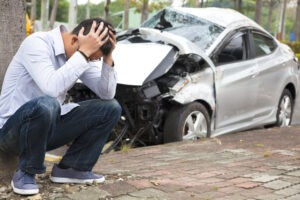
After a car accident in Virginia, call 911 when anyone may be injured, move away from immediate danger if it is safe to do so, exchange information, photograph the scene and obtain appropriate medical care. You should also notify your insurer, preserve records and avoid signing a settlement release before understanding your injuries and the rights the document will end.
The 10 most important steps are:
- Stop and protect yourself from immediate danger.
- Call 911 and check for injuries.
- Move movable vehicles when Virginia law and safety permit.
- Report the collision to law enforcement.
- Exchange driver, vehicle and insurance information.
- Document the scene and identify witnesses.
- Obtain emergency and follow-up medical care.
- Notify your insurance company accurately and promptly.
- Preserve evidence, bills and employment records.
- Consider legal advice before accepting a settlement or signing a release.
Your immediate safety and health should come before gathering evidence or discussing insurance. Once those needs are addressed, careful documentation may help insurers, attorneys and courts understand what happened.
A Virginia car accident lawyer can review the collision, injuries, insurance coverage and applicable deadlines. Hiring an attorney does not guarantee compensation or a particular settlement.
Virginia Car Accident Checklist
| Action | What to do | Important caution |
|---|---|---|
| Call for help | Call 911 for injuries, danger, blocked roads or a hit-and-run. | Do not delay emergency assistance to take photographs. |
| Move the vehicle | When no one is injured, the vehicle is movable and it is safe, move it out of traffic. | Do not move an injured person unnecessarily. |
| Exchange information | Collect licence, registration, insurance and contact details. | Do not argue about fault. |
| Document the scene | Photograph vehicles, roads, debris, signals and visible injuries. | Preserve original files without editing them. |
| Get medical care | Obtain emergency care for danger signs and follow up for new symptoms. | Do not diagnose yourself based on vehicle damage. |
| Report insurance | Notify your insurer according to the policy. | Do not guess about fault, speed or medical prognosis. |
| Preserve records | Keep reports, bills, wage records and correspondence. | Do not discard damaged property too quickly. |
| Review settlement documents | Understand the amount, released parties and claims covered. | A signed release may permanently end the claim. |
Get a free legal consultation
CALL 757-648-85791. Stop and Protect Yourself From Immediate Danger
Virginia law requires a driver involved in an accident causing injury, death or damage to attended property to stop as close to the scene as possible without unnecessarily obstructing traffic.
Turn on your hazard lights when they work. Before leaving the vehicle, look for:
- Moving traffic
- Fire or smoke
- Leaking fuel
- Downed power lines
- Broken glass or sharp debris
- An unstable vehicle
- Other immediate hazards
Do not stand between damaged vehicles or remain in an active traffic lane to inspect property damage.
Should you move an injured person?
Do not unnecessarily move someone who may have a head, neck, back or spinal injury. Movement may worsen certain injuries.
Move a person only when:
- An immediate hazard makes remaining in place more dangerous;
- An emergency dispatcher directs you to do so; or
- You are providing appropriate emergency assistance within your training.
Follow instructions from 911 dispatchers and emergency personnel.
2. Call 911 and Check for Injuries
Call 911 when:
- Anyone appears injured, unconscious or confused.
- There is severe bleeding.
- Someone has trouble breathing.
- A person reports severe chest, abdominal, neck or back pain.
- A vehicle is blocking or creating a danger on the roadway.
- A driver appears impaired.
- A driver attempts to leave.
- The other vehicle is unidentified or uninsured.
- You are uncertain whether emergency help is needed.
Tell the dispatcher:
- The crash location
- The direction of travel
- The number and type of vehicles
- The apparent number of injured people
- Whether traffic, fire, fuel or debris creates a danger
Emergency head-injury warning signs
Call 911 or go to an emergency department immediately when a person has:
- A worsening headache that does not go away
- Repeated vomiting
- Seizures or convulsions
- Weakness, numbness or reduced coordination
- Slurred speech
- One pupil larger than the other
- Increasing confusion, agitation or unusual behaviour
- Loss of consciousness
- Extreme drowsiness or difficulty waking
- Difficulty recognising people or places
Some concussion symptoms may begin immediately, while others may not appear until hours or days later.
Contact our personal injury lawyers today
GET FREE EVALUATION3. Move the Vehicles When It Is Safe and Required
Under Virginia Code § 46.2-888, a driver generally must move a vehicle from the roadway when:
- No one was injured or killed.
- The vehicle is movable.
- The driver is capable of acting safely.
- Moving it will prevent obstruction of normal traffic.
When possible, move the vehicle to the shoulder or another safe nearby location. Report the vehicle’s location to law enforcement as soon as practicable.
Moving the vehicle under these circumstances does not prevent the responding officer from investigating the crash.
Take quick photographs before moving when safe
If you can do so without remaining in danger, take a few quick photographs showing:
- Vehicle positions
- Points of impact
- Lane markings
- Traffic signals and signs
Do not delay movement or endanger yourself merely to obtain photographs.
4. Report the Accident to Law Enforcement
Under Virginia Code § 46.2-371, a driver involved in an accident causing injury or death must immediately notify a law-enforcement officer.
A willful failure to make the required report is a Class 4 misdemeanor.
Calling police is also advisable when:
- Vehicles cannot be driven safely.
- The other driver refuses to exchange information.
- The other driver appears impaired.
- A commercial or government vehicle is involved.
- A pedestrian or cyclist is involved.
- The other driver flees.
- There is substantial property damage.
- Fault is likely to be disputed.
What does the responding officer do?
The officer may:
- Secure the scene
- Arrange emergency assistance
- Interview drivers, passengers and witnesses
- Document vehicles and road conditions
- Record insurance information
- Investigate possible traffic violations
- Provide an incident or crash-report number
Under Virginia Code § 46.2-373, an officer who investigates an accident involving injury, death or apparent total property damage of at least $3,000 must forward a written report to the Virginia Department of Motor Vehicles within 24 hours after completing the investigation.
A police report can provide useful information, but it does not automatically establish civil liability or the value of an injury claim.
How do you obtain a Virginia crash report?
A driver, passenger, injured person, vehicle owner or other authorised person may request a crash report from the Virginia Department of Motor Vehicles.
Information commonly needed for a request includes:
- The crash date and time
- The location
- The driver’s name
- Your role in the accident
- Your driver’s licence number when applicable
DMV currently permits requests by mail, fax or in person and charges a records fee. Confirm the current process through the official Virginia DMV crash-report page.
5. Exchange Driver, Vehicle and Insurance Information
Under Virginia Code § 46.2-894, a driver involved in an accident causing injury, death or damage to attended property must provide specified identifying information and render reasonable assistance to injured people.
Collect the other driver’s:
- Full name
- Address
- Telephone number and email address
- Driver’s licence number
- Vehicle registration number
- Licence-plate number
- Insurance company
- Policy number
- Vehicle owner’s name, if different from the driver
When permission is given, photograph the licence, registration and insurance card. Confirm that the information belongs to the driver and vehicle involved.
Provide the information required from you, but avoid arguing about fault or making speculative statements.
What if the other driver refuses?
Do not physically confront the driver. Record the licence plate, vehicle description and location, then provide the information to law enforcement.
What if You Hit a Parked Car or Other Unattended Property?
Under Virginia Code § 46.2-896, a driver who damages an unattended vehicle or property must make a reasonable effort to locate the owner or custodian.
If the owner cannot be found, the driver must:
- Leave sufficient identifying and contact information in a conspicuous place.
- Include the information required under § 46.2-894.
- Make a written report to State Police or the appropriate local law-enforcement agency within 24 hours.
- Include the date, time, location and description of the damage.
Leaving only a telephone number without the other required information may not satisfy the statute.
6. Document the Car Accident Scene
When it is safe and your condition allows, document the scene before temporary evidence disappears.
Photograph or record:
- Every vehicle from several angles
- Points of impact
- Vehicle positions
- Skid marks, gouges and debris
- Airbag deployment
- Damage inside the passenger compartment
- Traffic signs and signals
- Lane markings
- Road defects or construction
- Weather and lighting conditions
- Visible injuries
- Damaged personal belongings
- Nearby homes, businesses or cameras
Take both wide photographs of the overall area and close-up photographs of specific details. Preserve the original files without applying filters, adding text or changing the metadata.
Collect witness information
Ask independent witnesses for:
- Their name
- Telephone number
- Email address
- A brief explanation of what they observed
Do not pressure a witness to agree with your version. Preserve the contact information so that law enforcement, insurers or attorneys can conduct an appropriate interview.
Write down what happened
As soon as reasonably possible, record:
- The time and location
- Your direction and lane of travel
- Traffic and weather conditions
- What each vehicle did before impact
- Traffic signals or signs you observed
- Statements made by drivers or witnesses
- When police and emergency personnel arrived
Keep the account factual. Do not estimate speed or distance unless you genuinely know the answer.
7. Obtain Appropriate Medical Care
Seek emergency care for serious symptoms. After a significant collision, head impact, new pain or uncertainty about whether you were injured, contact a qualified healthcare professional for individual advice.
Possible collision injuries include:
- Concussion or traumatic brain injury
- Whiplash and neck injuries
- Back and spinal injuries
- Chest and rib injuries
- Internal bleeding or organ damage
- Fractures
- Joint and soft-tissue injuries
- Nerve damage
- Cuts and burns
- Psychological trauma
Difficulty breathing, severe chest or abdominal pain, uncontrolled bleeding, loss of consciousness, significant weakness or possible spinal injury requires urgent evaluation.
Can symptoms be delayed?
Yes. Some people notice soreness, stiffness, headaches or neurological symptoms later in the day or over the following days.
Contact a healthcare professional if you develop:
- Increasing neck or back pain
- A worsening headache
- Dizziness or balance problems
- Numbness or weakness
- Difficulty concentrating
- Vision changes
- Abdominal pain
- New swelling or reduced movement
Follow the treatment plan
After an evaluation:
- Attend recommended follow-up appointments.
- Take medication as directed.
- Complete therapy when prescribed.
- Report new or worsening symptoms.
- Ask when it is safe to drive, work or exercise.
- Retain bills, prescriptions and work restrictions.
Medical decisions should focus on diagnosis and recovery—not on increasing the value of an insurance claim.
8. Notify Your Insurance Company
Review your policy and report the collision within the time and manner it requires.
Provide basic information such as:
- The date and time
- The location
- The vehicles involved
- The police-report number
- Known injuries
- The location of your vehicle
Be truthful, accurate and concise. Do not guess about:
- Speed or distance
- Fault
- Medical diagnoses
- How long recovery will take
- Whether you will miss additional work
It is reasonable to say that the crash remains under investigation or that your medical evaluation is continuing.
Do you have to give a recorded statement?
The answer may depend on who is requesting it.
Your own insurer may require reasonable cooperation under your policy. A request from the other driver’s liability insurer presents different considerations.
Before agreeing, ask:
- Which insurance company is requesting the statement?
- Whom does the company insure?
- Which policy and claim number apply?
- Whether you are required to provide it
- Which subjects will be discussed
- How the statement will be used
- Whether you will receive a copy or transcript
Do not lie, exaggerate or deliberately withhold material facts. Do not guess when you do not know or remember an answer.
What Insurance May Apply After a Virginia Car Accident?
Potential coverage may include:
- The at-fault driver’s bodily-injury liability coverage
- The at-fault driver’s property-damage liability coverage
- Your uninsured or underinsured motorist coverage
- Optional medical-expense benefits
- Optional income-loss benefits
- Collision coverage
- Commercial, employer or rideshare insurance
- Excess or umbrella coverage
For policies effective on or after January 1, 2025, Virginia’s ordinary minimum liability limits are:
- $50,000 for bodily injury or death to one person
- $100,000 for bodily injury or death to two or more people in one accident
- $25,000 for property damage
These are minimum coverage limits—not guaranteed payments or measures of claim value.
9. Preserve Evidence, Expenses and Employment Records
Keep a dedicated paper or electronic file containing:
- The police report and incident number
- Original photographs and videos
- Witness information
- Insurance correspondence
- Medical records and bills
- Prescription receipts
- Work restrictions
- Pay statements
- Employer correspondence
- Repair estimates
- Towing and storage bills
- Rental-vehicle expenses
- Receipts for damaged personal property
Preserve electronic evidence
Save:
- Dash-camera recordings
- Phone photographs and video
- Navigation data
- Text messages relating to the collision
- Rideshare or delivery-app information
- Emails and claim-portal messages
Some video systems automatically overwrite recordings. Copy the files promptly without editing the originals.
Preserve the vehicle when necessary
When a serious injury, vehicle defect or disputed crash mechanism is involved, consider whether the vehicle should be inspected before repair or disposal.
Continue monitoring towing and storage charges while preserving evidence. Ask where the vehicle is being held, what is charged each day and what is required for access or removal.
What Should You Avoid After a Car Accident?
- Do not leave the scene without completing your legal duties.
- Do not remain in dangerous traffic merely to take photographs.
- Do not admit fault or speculate about the cause.
- Do not give inconsistent accounts to different people.
- Do not minimise or exaggerate symptoms.
- Do not post detailed crash or recovery information on social media.
- Do not discard damaged property before documenting it.
- Do not sign a broad medical authorisation without understanding it.
- Do not accept a settlement before evaluating future losses.
- Do not assume negotiations extend the lawsuit deadline.
Be Careful With Early Settlement Offers
An early offer is not automatically improper. It may be reasonable when the injuries are minor, treatment is complete, liability is clear and all losses are known.
An early settlement may be risky when:
- Your diagnosis remains uncertain.
- You are still receiving treatment.
- Surgery or rehabilitation may be needed.
- You have not returned to work.
- Future medical expenses have not been evaluated.
- Medical liens remain unresolved.
- Another insurance policy may apply.
Before signing a release, identify:
- The amount being paid
- Every person or company being released
- Every claim covered by the release
- Whether unknown injuries are included
- Whether property and bodily-injury claims are both included
- What amount you will receive after deductions
Can you cancel an early Virginia release?
Under Virginia Code § 8.01-425.1, an unrepresented claimant who signs a personal-injury release within 30 days after the accident generally has until midnight of the third business day after signing to rescind it.
The rescission must be:
- Made in writing;
- Sent to the released person, representative or insurer; and
- Accompanied by the return of any check or settlement proceeds already received.
This right is limited. Do not assume every settlement can be cancelled after signing.
10. Consider Whether You Need a Car Accident Lawyer
Not every minor collision requires legal representation. A person may be able to handle a straightforward property-damage or minor-injury claim independently.
Consider obtaining legal advice when:
- You suffered a serious or permanent injury.
- You required surgery or extensive rehabilitation.
- You may need future medical care.
- You cannot return to the same work.
- Fault is disputed.
- You are accused of contributing to the accident.
- Several vehicles or insurers are involved.
- A commercial, rideshare or government vehicle is involved.
- The responsible driver was uninsured or underinsured.
- The insurer denied the claim.
- You received an early settlement offer.
- You were asked to sign a broad release.
- The filing deadline is approaching.
A lawyer may:
- Preserve video and physical evidence
- Investigate liability
- Obtain police, medical and employment records
- Identify responsible parties and insurance policies
- Respond to contributory-negligence allegations
- Document past and future losses
- Communicate with insurance representatives
- Evaluate settlement documents
- File a lawsuit when appropriate
Hiring a lawyer does not guarantee that the claim will succeed or that a particular amount will be recovered.
How Is Fault Determined After a Virginia Car Accident?
Fault may be evaluated using:
- Traffic laws
- Police reports
- Driver and witness statements
- Scene photographs and video
- Vehicle damage
- Dash-camera or surveillance footage
- Electronic vehicle data
- Road and weather conditions
- Accident-reconstruction evidence
Learn more about how fault is determined in a Virginia car accident.
Virginia’s Contributory-Negligence Rule
Virginia follows the contributory-negligence doctrine in ordinary negligence claims.
A defendant may argue that the injured person’s own negligence contributed to causing the collision and therefore prevents recovery.
Possible allegations include that the claimant:
- Was speeding
- Followed too closely
- Failed to keep a proper lookout
- Made an unsafe lane change
- Ignored a traffic signal
- Was distracted or impaired
An insurance company’s allegation is not a final decision. The conduct must be supported by evidence and connected to the cause of the accident.
What Compensation May Be Available?
If another party is legally responsible, an injured person may be able to pursue compensation for accident-related losses supported by the evidence.
Potential damages may include:
- Emergency and hospital expenses
- Past medical treatment
- Reasonably anticipated future medical care
- Rehabilitation
- Lost income
- Reduced earning capacity
- Physical pain and inconvenience
- Permanent impairment
- Scarring or disfigurement
- Vehicle damage
- Damage to personal property
- Other legally recoverable losses
Compensation is not automatic. Liability, medical causation, contributory negligence, insurance coverage and supporting evidence may affect the result.
How Long Do You Have to File a Virginia Car Accident Lawsuit?
Under Virginia Code § 8.01-243:
- A personal-injury action generally must be filed within two years after the cause of action accrues.
- A property-damage action generally must be filed within five years after the cause of action accrues.
Different deadlines, exceptions or notice requirements may apply when a claim involves:
- A minor or incapacitated person
- A death resulting from the accident
- The Commonwealth or a local government
- An unidentified or hit-and-run driver
- Another special statutory circumstance
Insurance negotiations, claim investigations and settlement discussions do not necessarily extend the lawsuit deadline.
Frequently Asked Questions
Do you have to call the police after every Virginia car accident?
Virginia requires immediate notice to law enforcement when an accident causes injury or death. Calling police is also advisable after a hit-and-run, substantial damage, a blocked road, suspected impairment or a dispute about information.
Do you have to move your car after an accident?
When no one is injured or killed, the vehicle is movable and you can act safely, Virginia law generally requires the vehicle to be moved out of the roadway to avoid obstructing traffic.
What information must drivers exchange?
Virginia law requires specified identifying information, including name, address, driver’s licence number and vehicle registration number. It is also prudent to exchange insurance and contact information.
What if the other driver leaves?
Call law enforcement immediately. Record the vehicle description, licence plate, direction of travel and driver description without pursuing the vehicle.
Should I go to the hospital if I feel fine?
Seek emergency care for danger signs and contact a healthcare professional after a significant collision, head impact or new symptoms. Some symptoms may appear later.
Should I admit fault at the scene?
Provide truthful facts and complete your legal duties, but do not speculate or accept responsibility before the evidence is understood.
Should I give the other insurer a recorded statement?
Determine who is requesting it, whether you are required to provide it and how it will be used. Your duties to your own insurer may differ from your obligations to another driver’s insurer.
Should I report the accident to my own insurer?
Review your policy and provide notice according to its requirements. Even when another driver appears responsible, your own coverage may become relevant.
Should I post accident photographs on social media?
Preserve photographs as evidence, but avoid public posts about the accident, fault, injuries, treatment or activities while the claim is disputed.
Can I accept a settlement while still receiving treatment?
Yes, but doing so may create risk when the diagnosis, future treatment and work effects remain uncertain. A signed release may end the right to seek additional compensation.
Can I cancel a settlement release?
Virginia provides a limited three-business-day rescission right for certain unrepresented claimants who sign a personal-injury release within 30 days after the accident.
Does hiring a lawyer guarantee compensation?
No. A lawyer may investigate, preserve evidence and identify coverage, but cannot guarantee payment or a particular outcome.
Discuss a Virginia Car Accident With Atkinson Law
Your immediate health and safety should remain the first priorities after a collision. Once those needs are addressed, accurate documentation and timely action can help preserve the available evidence and insurance options.
Atkinson Law can review the collision, injuries, police report, insurance policies and disputed-liability issues. For accidents in Hampton Roads, learn more about working with a Norfolk car accident lawyer.
Atkinson Law handles qualifying matters under written contingency-fee agreements. The agreement should explain the attorney-fee percentage, treatment of case expenses and calculation of the client’s distribution.
Contact Atkinson Law to request a free, no-obligation consultation about a Virginia car accident claim.
This page provides general medical, insurance and legal information. It does not guarantee compensation or a particular outcome. Call 911 when a person may have a medical emergency. Reading this page or contacting the firm does not create an attorney-client relationship.
Call or text 757-648-8579 or complete a Free Case Evaluation form
CONTACT US TODAY