
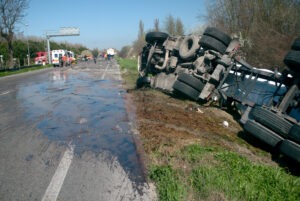
If you are involved in a truck accident in Virginia, call 911, move to a safe location if you can, obtain medical care, exchange information, photograph the scene and notify your insurer. You should also consider speaking with a Virginia truck accident attorney promptly because trucking-company records and other important evidence may not be preserved indefinitely.
The six most important steps to take after a Virginia truck accident are:
- Call 911 and report the truck accident.
- Seek medical attention.
- Document the vehicles, road and surrounding scene.
- Exchange information and identify witnesses.
- Notify your insurance company without speculating about fault.
- Speak with a truck accident lawyer about preserving evidence and protecting your claim.
These steps can protect your health, create a reliable record of the collision and help preserve evidence that may be needed to determine who was responsible.
Attorney Ed Atkinson helps people injured in commercial-vehicle collisions understand their legal options. Learn more about working with a truck accident lawyer in Virginia, or contact Atkinson Law for a free initial consultation.
What Should You Do Immediately After a Truck Accident?
In the first few minutes after a collision, prioritise safety rather than your insurance claim. Check yourself and your passengers for injuries, call 911 and follow the instructions of emergency responders.
- Move out of active traffic if it is safe and physically possible.
- Turn on your hazard lights.
- Do not stand between damaged vehicles or near leaking fuel.
- Do not attempt to move someone with a possible neck or spinal injury unless an immediate danger requires it.
- Wait for police officers and emergency medical personnel to arrive.
Do not leave the scene before completing the duties required by Virginia law unless you need emergency treatment or an officer instructs you to leave.
Get a free legal consultation
CALL 757-648-85791. Call 911 and Report the Truck Accident
Call 911 after a truck collision involving an injury, a death, significant vehicle damage or a dangerous road condition. Tell the dispatcher where the crash happened, how many vehicles were involved, whether anyone appears injured and whether the truck is blocking traffic.
Under Virginia Code § 46.2-371, a driver involved in a crash resulting in an injury or death must immediately notify law enforcement. A willful failure to provide the required notice is classified as a Class 4 misdemeanor.
Virginia law also requires drivers involved in certain accidents to stop, provide identifying information and render reasonable assistance to injured people. These duties are described in Virginia Code § 46.2-894.
What will the responding officer do?
The officer may secure the scene, speak with drivers and witnesses, note visible injuries and vehicle damage, document road conditions and investigate possible traffic violations.
Under Virginia Code § 46.2-373, an officer who investigates a crash involving injury, death or apparent total property damage of at least $3,000 must forward a written report to the Virginia Department of Motor Vehicles within 24 hours after completing the investigation.
The report must include the applicable insurance carrier or agent information. Depending on the crash, it may also document vehicle types, estimated speeds and whether a commercial truck was covered or uncovered.
You can later request an available police crash report through the Virginia Department of Motor Vehicles. Keep your crash date, location, driver information and report or incident number available.
What if alcohol or drugs may have been involved?
Tell the responding officer if you observed behaviour suggesting impairment, such as erratic driving, slurred speech or the smell of alcohol. Report what you personally observed without exaggerating or making assumptions.
Punitive damages are not automatically available simply because a driver consumed alcohol. They may be considered when the evidence satisfies Virginia’s legal requirements for malicious, willful or wanton conduct. A Virginia drunk-driving accident lawyer can review the available test results and other evidence.
When a truck accident results in death, certain surviving family members may have a wrongful-death claim. Atkinson Law can explain the process for working with a Virginia wrongful-death lawyer.
2. Seek Medical Attention
Obtain medical care as soon as possible, even if you initially believe your injuries are minor. The force generated in a commercial-truck collision can result in injuries whose symptoms are not immediately obvious.
Adrenaline, shock and stress can temporarily mask pain. A medical professional can evaluate your condition, recommend treatment and tell you which symptoms require additional attention.
Common injuries after truck accidents
- Traumatic brain injuries and concussions
- Neck and back injuries
- Spinal cord injuries
- Broken bones and fractures
- Internal bleeding or organ damage
- Soft-tissue injuries
- Cuts, bruises, burns and lacerations
- Psychological trauma
Tell your healthcare provider that the symptoms began after a truck accident and describe every affected area accurately. Follow the treatment plan, attend recommended appointments and retain copies of bills, prescriptions, test results, work restrictions and discharge instructions.
Medical records can help establish when symptoms were reported, what conditions were diagnosed and which treatments were recommended. However, no particular treatment guarantees a specific settlement. Every claim depends on its own evidence, injuries, insurance coverage and disputed issues.
Contact our personal injury lawyers today
GET FREE EVALUATION3. Document the Truck Accident Scene
If you can safely do so, use your phone to record the scene before the vehicles are moved and temporary evidence disappears. Do not place yourself in traffic or interfere with emergency responders to obtain photographs.
Photograph and record the following
- Damage to every involved vehicle
- The position of the vehicles
- Skid marks, debris and damaged barriers
- Traffic signals, lane markings and warning signs
- Road, lighting and weather conditions
- Your visible injuries
- The truck’s licence plate and unit number
- The trailer number and identifying markings
- The trucking company’s name and logo
- The truck’s USDOT number, when visible
- Any spilled, unsecured or unusual cargo
- Nearby businesses, traffic cameras or doorbell cameras
Take photographs from multiple safe angles, including wide images showing the entire scene and closer images showing specific damage. Preserve the original files rather than editing, filtering or posting them online.
Write down what happened
As soon as you are able, record what you remember about the collision. Include the time, location, direction of travel, traffic conditions, sequence of events and anything the truck driver or witnesses said.
Memories can become less precise over time. Notes created shortly after the collision may help you give an accurate account later, but they should remain factual and should not include guesses about speed, distance or fault.
4. Exchange Information and Identify Witnesses
Virginia Code § 46.2-894 requires a driver involved in an accident involving injury, death or damage to attended property to stop and provide specified information.
Obtain the following information from the truck driver when possible:
- Full name and address
- Driver’s licence number
- Vehicle registration information
- Insurance company and policy information
- Employer or motor-carrier name
- Truck, tractor and trailer numbers
- USDOT number
Commercial trucks may be owned, operated, leased or maintained by different businesses. Photograph identifying documents and vehicle markings rather than relying only on handwritten notes.
Collect witness information
Ask witnesses for their names, phone numbers and email addresses. Witnesses may leave before police complete their investigation, so gather their details when it is safe to do so.
Do not pressure a witness to agree with your description. Ask what the person observed and allow the police, insurance companies and attorneys to conduct any detailed interviews.
5. Notify Your Insurance Company
Report the collision to your own insurance company within the time required by your policy. Provide the date, location, vehicles involved and a concise factual description.
Do not guess about your speed, distance, injuries or who caused the crash. It is reasonable to say that you do not know an answer or that the accident remains under investigation.
Use caution when speaking with another insurer
The trucking company or its insurer may contact you soon after the accident. Before giving a recorded statement, signing a medical authorisation or accepting a settlement, make sure you understand what the document or offer covers.
An early settlement may not account for continuing treatment, future medical care, lost earning capacity or other losses that have not yet been fully documented.
A Virginia personal injury lawyer can communicate with insurers, collect supporting records and evaluate whether a proposed settlement reflects the available evidence and damages.
6. Speak With a Virginia Truck Accident Lawyer
Truck accident cases can involve evidence and regulations that do not normally arise in a collision between two passenger vehicles. The driver, motor carrier, vehicle owner, maintenance contractor, cargo-loading company or another business may possess relevant records.
An attorney can send preservation notices requesting that the appropriate parties retain potentially relevant evidence.
Truck-specific evidence may include
- Electronic logging device records
- Driver records of duty status
- Dispatch messages and trip records
- GPS and fleet-management data
- Onboard or dashboard-camera footage
- Engine or vehicle-event data, when available
- Inspection, repair and maintenance records
- Driver hiring, qualification and training records
- Drug and alcohol testing records
- Weight tickets, bills of lading and cargo documents
- Mobile-phone and communication records obtained through lawful procedures
Federal guidance generally requires motor carriers to retain electronic logging-device records and supporting documents for six months. Other records may have different retention periods. Acting promptly can therefore help identify evidence before it is routinely overwritten or discarded.
Truck collisions may also require an investigation into federal hours-of-service, vehicle inspection, maintenance, driver qualification and cargo-securement requirements. The existence of a regulation does not by itself prove negligence; the facts must show whether a violation occurred and whether it contributed to the collision.
Who May Be Responsible for a Truck Accident?
Responsibility depends on how the collision happened and the relationships among the people and companies involved. Potentially responsible parties may include:
- A truck driver who drove carelessly, while distracted or while impaired
- A motor carrier that failed to supervise, train or qualify a driver appropriately
- A vehicle owner responsible for an unsafe truck or trailer
- A maintenance provider that performed negligent repairs
- A cargo-loading company responsible for an unsafe or unsecured load
- A manufacturer responsible for a defective vehicle or component
- Another road user whose conduct contributed to the crash
More than one party may share responsibility. Determining liability normally requires reviewing the physical evidence, witness statements, police findings, company records and applicable contracts.
What Should You Avoid After a Truck Accident?
After obtaining emergency assistance, avoid actions that could harm your health, destroy evidence or create an inaccurate account of what happened.
- Do not admit fault or apologise in a way that could be misunderstood as accepting responsibility.
- Do not speculate about speed, distance or the cause of the crash.
- Do not post accident details, photographs or health updates on social media.
- Do not ignore new or worsening symptoms.
- Do not miss appointments without documenting the reason.
- Do not sign a broad medical authorisation without understanding it.
- Do not accept a settlement before understanding which claims it releases.
- Do not repair or dispose of important physical evidence before documenting it.
How Long Do You Have to File a Virginia Truck Accident Claim?
Virginia Code § 8.01-243 generally gives an injured person two years from the date a personal-injury claim accrues to file a lawsuit. Different rules may apply to wrongful-death claims, claims involving government entities, injured minors and other circumstances.
The filing deadline is different from an insurance company’s internal reporting deadline. Waiting can also make a case more difficult even when the statutory deadline has not expired because video, electronic data and witness recollections may no longer be available.
Speak with an attorney about the deadline that applies to your specific circumstances rather than relying solely on a general two-year period.
Frequently Asked Questions
Do I have to call the police after a truck accident in Virginia?
A driver must immediately notify law enforcement when an accident results in injury or death. Calling 911 is also advisable when there is significant damage, a dangerous roadway condition or uncertainty about whether anyone is injured.
Should I give the trucking company’s insurer a recorded statement?
You should report the basic facts required by your own insurance policy. Before giving another insurer a recorded statement, consider obtaining legal advice so that you understand who is requesting it, how it may be used and whether you are required to provide it.
Can I recover compensation if I was partly responsible?
Virginia follows a strict contributory-negligence rule in many personal-injury cases. Allegations that an injured person contributed to the accident can therefore become a major disputed issue. Do not assume that an insurer’s allegation is correct; liability should be evaluated using the complete evidence.
What compensation may be available?
Depending on the facts, recoverable losses may include medical expenses, lost income, reduced earning capacity, pain, disability, property damage and other accident-related losses. There is no universal or guaranteed settlement amount. Read more about the factors affecting the average truck accident settlement in Virginia.
Why are truck accidents more complicated than car accidents?
Truck cases may involve multiple businesses, commercial insurance policies, federal safety rules and electronic or operational records controlled by the motor carrier. Determining which company employed, leased, maintained, dispatched or loaded the truck may require a detailed investigation.
Discuss Your Virginia Truck Accident With Atkinson Law
A serious truck accident can leave you dealing with medical care, missed work, vehicle damage and repeated calls from insurance representatives. Atkinson Law can investigate the circumstances, identify potentially responsible parties and explain the available legal options.
Attorney Ed Atkinson handles cases on a contingency-fee basis, meaning attorney’s fees are generally collected only if compensation is recovered. The terms and expenses applicable to your case will be explained before representation begins.
For a collision in the Hampton Roads area, learn more about working with a Norfolk truck accident lawyer.
Contact Atkinson Law to request a free, no-obligation consultation about your Virginia truck accident.
This page provides general information and is not legal advice. Reading this page or contacting the firm does not create an attorney-client relationship.
Call or text 757-648-8579 or complete a Free Case Evaluation form
CONTACT US TODAY