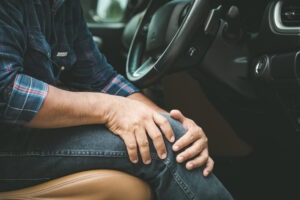
Car accidents can injure the bones, joints, muscles, ligaments, nerves and blood vessels of the legs. Five common categories are knee injuries, fractures, lacerations and crush wounds, nerve injuries, and other soft-tissue injuries.
Symptoms may include pain, swelling, bruising, instability, numbness, weakness or difficulty putting weight on the affected leg. A visibly deformed limb, exposed bone, uncontrolled bleeding, a cold or pale foot, worsening numbness or severe pain and swelling requires urgent medical attention.
A healthcare professional must determine the exact injury and appropriate treatment. The appearance of the vehicle damage or the ability to walk immediately after the collision cannot reliably establish whether the injury is minor.
If another driver may have caused the crash, a Norfolk car accident lawyer can separately review the accident evidence, available insurance and legal options.
Leg Injuries After a Car Accident at a Glance
| Injury category | Possible symptoms | How it may be evaluated |
|---|---|---|
| Knee injuries | Pain, swelling, popping, locking, instability or reduced motion | Physical examination and, when appropriate, X-ray or MRI |
| Fractures | Severe pain, swelling, bruising, deformity or inability to bear weight | Examination and imaging such as X-rays or CT |
| Lacerations and crush wounds | Bleeding, exposed tissue, pain, loss of feeling or difficulty moving | Wound, circulation, nerve and structural evaluation |
| Nerve injuries | Numbness, tingling, burning pain, weakness or reduced control | Neurological examination and, when needed, imaging or nerve studies |
| Soft-tissue injuries | Pain, swelling, bruising, weakness, spasms or reduced movement | Physical examination and selective imaging |
Get a free legal consultation
CALL 757-648-8579When Is a Leg Injury an Emergency?
Call 911 or seek immediate emergency care after a collision when:
- Bleeding is severe or does not stop with direct pressure.
- Bone is visible or protrudes through the skin.
- The leg appears severely deformed or shortened.
- The foot is cold, pale, blue or unusually dark.
- You cannot feel or move the foot or toes.
- There is severe or rapidly increasing swelling.
- Pain is much greater than expected or does not improve with prescribed measures.
- Numbness or weakness develops after a head, neck or back injury.
- You cannot stand or bear weight after significant trauma.
- You experience loss of bladder or bowel control.
- You also have chest pain, difficulty breathing, confusion or loss of consciousness.
Do not attempt to straighten a visibly deformed leg or push exposed bone or tissue back into place. Avoid moving a person unnecessarily when a head, neck or spinal injury may also be present.
1. Knee Ligament, Meniscus and Kneecap Injuries
The knee may strike the dashboard, centre console, door or another part of the vehicle. The joint may also twist when the foot remains planted while the body moves during impact.
Potential knee injuries include:
- Anterior cruciate ligament tear or sprain
- Posterior cruciate ligament injury
- Medial or lateral collateral ligament injury
- Meniscus tear
- Kneecap fracture or dislocation
- Tendon injury
- Cartilage damage
- Bone bruising
ACL injuries
The anterior cruciate ligament helps control forward movement and rotation of the shinbone relative to the thighbone. It also contributes to knee stability.
Possible ACL injury symptoms include:
- A popping sensation at the time of injury
- Rapid swelling
- Pain when putting weight on the leg
- Reduced range of motion
- A feeling that the knee is unstable or giving way
An ACL tear may occur with damage to the meniscus, cartilage or other knee ligaments. The diagnosis should therefore assess the knee as a whole rather than focusing on one structure.
Dashboard-related knee injuries
When a bent knee strikes the dashboard, the force may affect the kneecap, posterior cruciate ligament, hip or surrounding structures. Pain at the front of the knee does not necessarily identify the exact injury.
How are knee injuries diagnosed?
A healthcare professional may evaluate:
- Where the knee is tender
- How much swelling is present
- Whether the joint moves normally
- Whether the knee feels unstable
- Whether the kneecap or bones appear damaged
- Whether nerves and circulation are intact
X-rays may identify fractures and dislocations. MRI may be considered when ligament, meniscus, cartilage or other soft-tissue damage is suspected.
How are knee injuries treated?
Treatment depends on the structure injured, severity, instability, associated injuries, age, health, occupation and activity needs.
Care may include:
- Temporary activity modification
- A brace or other support
- Medication recommended by a healthcare professional
- Physical therapy
- Injections in selected circumstances
- Surgical repair or reconstruction
Not every ACL tear requires surgery, and not every knee injury can be treated with rest alone.
Contact our personal injury lawyers today
GET FREE EVALUATION2. Fractures of the Leg, Knee, Ankle or Foot
A car accident can fracture bones throughout the lower extremity, including:
- Femur or thighbone
- Patella or kneecap
- Tibia or shinbone
- Fibula
- Ankle bones
- Heel, midfoot or forefoot bones
- Toes
High-force collisions can also produce fractures in more than one location or combine a fracture with ligament, muscle, nerve or blood-vessel damage.
Possible signs of a fracture
- Severe or localised pain
- Swelling
- Bruising
- Tenderness
- Difficulty moving the limb
- Inability to bear weight
- A grinding or abnormal sensation
- Visible deformity
- A wound near the suspected break
A person may still be able to move or briefly walk on some fractures. Do not use the ability to stand as the only test for whether a bone is broken.
Closed versus open fractures
A closed fracture does not create an open skin wound communicating with the break. An open fracture involves a wound that exposes the fracture area to contamination, even when the broken bone is not visibly protruding.
Open fractures require urgent treatment because bacteria and debris may enter the wound and damaged bone.
Fracture treatment
Depending on the type and location of the fracture, treatment may involve:
- Splinting
- Cast or brace immobilisation
- Realignment of the bone
- Internal fixation using plates, screws, nails or rods
- External fixation
- Wound cleaning and infection prevention for open fractures
- Physical rehabilitation
Weight-bearing restrictions and recovery time vary substantially. Follow the treating professional’s instructions before walking, driving or returning to work.
3. Lacerations, Puncture Wounds and Crush Injuries
Broken glass, torn metal, vehicle components and roadside debris can cut or puncture the leg. A limb may also be compressed between vehicles or trapped inside a damaged passenger compartment.
A deep wound may affect:
- Skin and fatty tissue
- Muscles
- Tendons
- Ligaments
- Nerves
- Blood vessels
- Bone
When does a cut require emergency care?
Seek immediate assistance when:
- Bleeding is severe or cannot be stopped.
- The wound is large, deep or visibly contaminated.
- A foreign object is embedded in the wound.
- Bone, muscle or other deep tissue is visible.
- The area below the wound becomes numb, weak, pale or cold.
- The injured person cannot move the leg or foot normally.
Do not remove a deeply embedded object. Do not push exposed tissue back into the wound. Cover a major wound with clean material while waiting for emergency assistance.
Possible complications
Complications can include:
- Infection
- Damage to muscles, tendons or ligaments
- Nerve injury
- Blood-vessel damage
- Scarring or disfigurement
- Reduced movement
- Loss of tissue
Crush injuries and compartment syndrome
A serious crush injury can cause swelling inside a confined muscle compartment. If pressure rises enough, blood flow and nerve function may be compromised. This is called acute compartment syndrome.
Warning signs include:
- Pain that appears much greater than expected
- Severe pain that continues despite medication or elevation
- Rapid swelling
- Numbness or tingling
- Weakness
- Pale skin
- Difficulty moving the affected limb
Acute compartment syndrome is an emergency and may require immediate surgery to relieve pressure.
4. Nerve Damage in the Leg
Nerves may be compressed, stretched, bruised or severed during a collision. Leg symptoms can also result from an injury to the lower back, spinal cord or nerve roots rather than direct damage to a peripheral nerve in the leg.
Possible symptoms include:
- Numbness
- Tingling or pins and needles
- Burning pain
- Electric or shooting pain
- Muscle weakness
- Reduced reflexes
- Difficulty lifting the foot
- Loss of balance or coordination
- Reduced sensitivity to temperature or touch
New numbness or weakness after a crash should not be ignored. Call 911 when it occurs after a head, neck or back injury or appears with difficulty walking, slurred speech, confusion or loss of bladder or bowel control.
How is nerve damage evaluated?
The evaluation may include:
- Strength testing
- Sensation testing
- Reflex examination
- Assessment of walking and balance
- Spinal and joint examination
- Imaging when appropriate
- Nerve-conduction or electromyography studies in selected cases
Can damaged nerves recover?
The outlook depends on the nerve involved, the type and extent of damage, whether compression continues and how quickly the underlying cause is treated.
Treatment may include:
- Addressing fractures, swelling or compression
- Medication for pain or nerve-related symptoms
- Physical or occupational therapy
- Bracing or assistive devices
- Surgical repair or decompression in selected cases
Only a qualified healthcare professional can provide an individual prognosis.
5. Muscle, Tendon and Other Soft-Tissue Injuries
Soft-tissue injuries can affect the muscles, tendons, ligaments, fascia and connective tissues of the thigh, knee, calf, ankle and foot.
Examples include:
- Muscle strains
- Ligament sprains
- Partial or complete tendon tears
- Muscle contusions
- Ankle sprains
- Calf injuries
- Achilles tendon injuries
- Deep tissue bruising
Possible symptoms
- Pain or tenderness
- Swelling
- Bruising
- Muscle spasms
- Weakness
- Reduced range of motion
- Pain while walking or putting weight on the leg
- A feeling that a joint is unstable
Soft-tissue injuries are not automatically minor. A complete tendon or ligament tear may significantly affect walking, working and long-term joint stability.
Treatment and rehabilitation
Depending on the diagnosis, care may include:
- Protection or temporary immobilisation
- Activity modification
- Cold therapy or compression when medically appropriate
- Medication recommended by a healthcare professional
- Physical therapy
- Gradual strengthening and return to activity
- Surgery for selected severe tears or instability
Do not place full weight on a severely painful or unstable leg unless a healthcare professional has said it is safe.
Can Leg-Injury Symptoms Appear Later?
Yes. Pain, stiffness, bruising and swelling may become more noticeable during the hours or days after a collision.
Contact a healthcare professional when:
- Pain or swelling develops after the initial evaluation.
- Symptoms continue to worsen.
- The knee, ankle or leg begins giving way.
- Numbness, tingling or weakness appears.
- You cannot return to normal walking or activity.
- A wound develops redness, warmth, drainage or increasing pain.
Delayed symptoms do not automatically establish that the condition was caused by the crash, but they also should not be dismissed without appropriate evaluation.
How Are Leg Injuries Diagnosed?
A healthcare professional may ask:
- How the collision occurred
- Which part of the vehicle struck the leg
- Whether the foot or knee was trapped
- When the symptoms began
- Whether you can stand or walk
- Whether numbness or weakness is present
- Whether you had prior injuries or medical conditions
The physical examination may assess:
- Swelling and bruising
- Joint stability
- Range of motion
- Muscle and tendon function
- Strength and sensation
- Foot pulses, temperature and colour
- Wounds and possible contamination
Diagnostic testing may include X-rays, CT scans, MRI, ultrasound or neurological testing when clinically appropriate.
How Long Can Recovery Take?
There is no universal recovery period. Minor bruising or a mild strain may improve relatively quickly, while a fracture, ligament reconstruction, nerve injury or crush injury may require months of treatment and rehabilitation.
Recovery can depend on:
- The specific structures damaged
- The severity of the injury
- Whether surgery was required
- Age and general health
- Pre-existing conditions
- Access to rehabilitation
- Employment and activity demands
- Whether complications develop
Ask the treating professional when it is safe to drive, return to work, bear weight or resume exercise.
What Evidence May Document a Leg-Injury Claim?
Potentially relevant evidence may include:
- Police crash reports
- Scene photographs and video
- Photographs of the vehicles and passenger compartment
- Photographs of swelling, wounds, bruising and assistive equipment
- Emergency and hospital records
- X-ray, CT and MRI reports
- Surgical and rehabilitation records
- Medical bills
- Work restrictions
- Pay statements and employer records
- Receipts for braces, crutches or other equipment
- Evidence showing how mobility and daily activities changed
Keep the records accurate and unaltered. Do not exaggerate or minimise symptoms for insurance purposes.
What Compensation May Be Available?
If another party is legally responsible for the collision, an injured person may be able to pursue compensation for accident-related losses supported by the evidence.
Potential damages may include:
- Emergency and hospital treatment
- Past medical expenses
- Reasonably anticipated future care
- Surgery and rehabilitation
- Lost income
- Reduced earning capacity
- Physical pain and inconvenience
- Scarring or disfigurement
- Permanent impairment
- Assistive equipment and necessary help
- Vehicle and personal-property damage
Compensation is not automatic. The claimant may need to prove liability, medical causation, the amount of the losses and the availability of applicable insurance coverage.
Why Does Contributory Negligence Matter in Virginia?
Virginia follows the contributory-negligence doctrine in ordinary negligence cases. A defendant may argue that the injured person’s own negligence contributed to the collision and therefore bars recovery.
Potential allegations may include that the driver:
- Was speeding
- Failed to keep a proper lookout
- Made an unsafe lane change
- Followed another vehicle too closely
- Ignored a traffic signal
- Was distracted or impaired
An insurer’s allegation is not proof. Photographs, video, witness accounts, vehicle damage and other evidence may be necessary to determine how the collision occurred.
How Long Do You Have to File a Virginia Car Accident Lawsuit?
Under Virginia Code § 8.01-243, a personal injury action generally must be filed within two years after the cause of action accrues.
Virginia generally provides a five-year period for an action involving property damage. Different deadlines, notice requirements or exceptions may apply when the claim involves a minor, government defendant, death or another special circumstance.
Insurance negotiations do not necessarily pause or extend the filing deadline.
When Should You Consider a Car Accident Lawyer?
Not every minor leg injury requires legal representation. Consider obtaining advice when:
- The injury required surgery or hospitalisation.
- You may need future medical treatment.
- You have permanent weakness, nerve damage or reduced mobility.
- You cannot return to the same work.
- Fault for the collision is disputed.
- You are accused of contributory negligence.
- Several drivers or insurance policies are involved.
- The insurer disputes whether the accident caused the injury.
- You receive a settlement offer before treatment is complete.
- You are asked to sign a broad release.
Read more about whether you need a personal injury lawyer.
A lawyer may investigate liability, preserve evidence, identify insurance, collect medical and employment records and document past and future losses. Hiring an attorney does not guarantee compensation or a particular settlement.
Frequently Asked Questions
What is the most common leg injury after a car accident?
There is no single injury that occurs in every collision, and the answer depends on the crash type and population studied. Bruising, strains, sprains, knee injuries, fractures, wounds and nerve symptoms can all occur.
Can you break your leg and still walk?
Some fractures may allow limited movement or weight-bearing, particularly immediately after trauma. Do not use the ability to walk as proof that no fracture occurred.
When should leg pain after a crash be treated as an emergency?
Seek emergency care for severe bleeding, exposed bone, major deformity, a cold or pale foot, loss of sensation, inability to move the foot or severe and rapidly increasing pain and swelling.
Can numbness after a car accident be serious?
Yes. Numbness may reflect nerve compression or injury, impaired circulation, spinal involvement or another neurological condition. New or worsening numbness requires medical evaluation.
Can swelling become dangerous?
Severe swelling combined with pain that appears out of proportion, numbness, weakness or pale skin may indicate acute compartment syndrome, which is an emergency.
Will an X-ray show every leg injury?
No. X-rays are useful for many fractures and dislocations but may not show every ligament, tendon, meniscus, nerve or muscle injury. Additional testing may be considered based on the examination.
Do soft-tissue injuries require surgery?
Many do not, but severe ligament or tendon tears, instability and associated injuries may require surgical treatment. The decision depends on the diagnosis and individual needs.
What if I had knee or leg problems before the accident?
A pre-existing condition does not automatically prevent a claim, but the insurer may dispute whether the collision caused a new injury or aggravated the prior condition. Accurate before-and-after medical evidence may be important.
Should I accept a settlement before finishing physical therapy?
Review whether the diagnosis, prognosis, future treatment, work effects and other losses are reasonably understood. A signed release may end the right to seek additional compensation later.
Does hiring a lawyer guarantee that I will recover compensation?
No. Legal representation may help investigate the collision and document a claim, but the outcome depends on the evidence, applicable law and available insurance.
Discuss a Car Accident Leg Injury With Atkinson Law
Your health should remain the first priority after a collision. Seek appropriate medical care for pain, swelling, wounds, numbness or reduced movement and follow the recommendations of qualified healthcare professionals.
Atkinson Law can review the collision evidence, medical documentation, insurance coverage and disputed-liability issues. You may also review the firm’s past case results, which do not guarantee a similar outcome in another matter.
Atkinson Law handles qualifying injury matters under written contingency-fee agreements. The agreement should explain the fee percentage, treatment of expenses and calculation of the client’s distribution.
Contact Atkinson Law to request a free, no-obligation consultation about a Virginia car accident and leg-injury claim.
This page provides general medical and legal information. It is not a substitute for emergency care, diagnosis, treatment or individual legal advice. Call 911 when a person may have a medical emergency. Reading this page or contacting the firm does not create an attorney-client relationship.
Call or text 757-648-8579 or complete a Free Case Evaluation form
CONTACT US TODAY